

Do ALS Patients Qualify for Hospice?
ALS—also known as Lou Gehrig’s disease—is a progressive illness that severely damages nerves in the spinal cord and brain. ALS stands for amyotrophic lateral sclerosis, and it affects roughly 12,000 to 15,000 Americans, according to information from the Centers for Disease Control.
Because this is a progressive disease, many wonder if ALS patients will qualify for hospice care. We have the answers you need about hospice and ALS, plus we’ll explain a bit about what hospice does and what makes Lower Cape Fear LifeCare different from other area hospice care providers.
Do ALS Patients Qualify for Hospice?
Depending upon what stage they are in their illness—yes. As for hospice and ALS, these patients can qualify for hospice care when their life expectancy is six months or less based on the current rate of disease progression. This diagnosis must be made by a physician.
In addition, to qualify for hospice care, ALS patients also:
- Should no longer be seeking treatment for their disease
- Must demonstrate functional and mental impairments
- Must be limited in their ability to care for themselves
- Must demonstrate impaired movement and mobility
Can Those With ALS Receive Palliative Care?
There is a difference between hospice and palliative care. It’s important to note that those with ALS can receive palliative care soon after they are diagnosed. Palliative care is for those of any age at any stage of their illness.
Palliative care is specialized medical care that improves the quality of life for those who have the symptoms and stress of serious illnesses. These illnesses can include (but are not limited to):
Is ALS Terminal?
Yes. Many people with ALS die within three to five years after the symptoms begin. However, an estimated 10 percent of those with ALS live for 10 years or longer.
What Do the Final Stages of ALS Look Like?
ALS affects the muscles and progresses gradually, eventually making it difficult for patients to move, eat or speak. Most of the voluntary muscles are paralyzed, and the patient is unable to care for himself or herself.
In the final stages of ALS, patients experience difficulty breathing. Most ALS deaths are due to respiratory failure.
How Can Hospice Help Those with ALS?
If you or someone you love is in the final stages of ALS, we want to make one thing clear:
Don’t wait to contact hospice care.
We have heard this phrase over and over: “I wish we had called hospice sooner!”
Many mistakenly believe that hospice is only for the last weeks of life. Nothing could be further from the truth.
Hospice care provides compassionate symptom relief and support for the entire family.
At Lower Cape Fear LifeCare, we concentrate on providing comfort and maintaining the highest quality of life possible for our patients. We do this through an interdisciplinary approach that meets spiritual and emotional—as well as physical— needs.
In fact, every single patient has access to our extensive resources of our care teams. Team members include:
- Physicians
- Registered nurses
- Nursing assistants
- Medical social workers
- Chaplains
- Specially trained volunteers
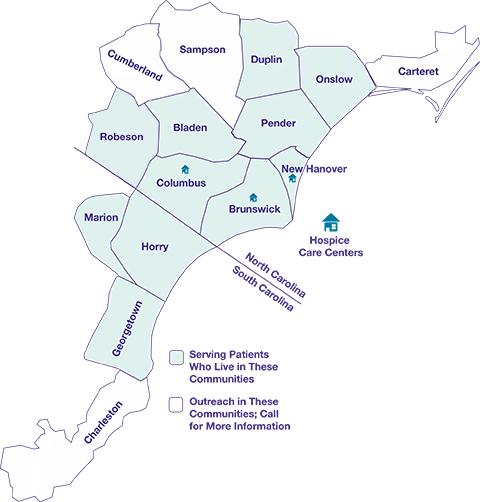
Not all hospices are the same. For decades, we have served Southeastern North Carolina and Northeastern South Carolina.
More than 90 percent of our patients are served wherever they live. This may be a private residence or skilled nursing facility. We even serve those who are in assisted living or hospitals.
Discover why so many choose Lower Cape Fear LifeCare. Making a referral is easy, quick and simple.